
You’re Not Broken: A Better Work Rhythm for Focus and Energy
Apr 18, 2026
I used to sit down to work with good intentions… and within minutes, everything would start to unravel.
One tab turned into five.
Five turned into twenty.
Email led to Google Drive, which led to Canva, which somehow led back to email again.
And somewhere in the middle of all that, I’d realize something simple. Something that should have taken maybe 30 minutes had quietly stretched into two hours.
If you’ve ever been there, you’ve probably asked yourself the same question I did:
What’s wrong with me?
That question sits under the surface for a lot of therapists, coaches, and helpers. Especially the ones who feel called to build something more. A course, a message, a way to reach more people, but can’t seem to stay focused long enough to make real progress.
So you try to fix it the only way you know how.
You push harder.
You tell yourself you need more discipline. More structure. More follow-through.
But what if that’s not the problem at all?
The Real Problem Isn’t Discipline
For a long time, I believed this was a willpower issue.
If I could just stay focused… if I could just finish what I started… then everything would click into place.
But the truth is, pushing through never actually worked.
In fact, it usually made things worse.
The harder I tried to force my way through mental resistance, the heavier everything felt. My thinking slowed down, frustration crept in, and distraction started to feel like relief instead of a problem.
That’s when I’d click away “just for a second”… and end up right back in the cycle.
It took me a long time to see this clearly:
This isn’t a discipline problem. It’s a rhythm problem.
You’re Not Built to Work Like a Machine
Most of us have quietly absorbed the idea that productive people can just sit down and work straight through the day.
No breaks. No dips in focus. Just steady output.
But that’s not how we’re built.
We’re not machines designed for nonstop output. We’re people, and people work best in cycles.
Focus for a while.
Step away.
Come back renewed.
When you ignore that rhythm, your brain doesn’t cooperate. It resists. But when you work with it instead of against it, something shifts.
You come back sharper.
Cleaner in your thinking.
More decisive with your actions.
And maybe most importantly, you stop fighting yourself.
A Simple Shift That Changes Everything
This is where things started to change for me.
Instead of trying to power through the dips, I began to work in cycles; specifically, 90-minute blocks of focused work followed by intentional rest.
Not perfect. Not rigid. But consistent enough to notice a difference.
During those 90 minutes, I focus on one clear task. Not five things at once. Not bouncing between projects. Just one target. Whether that’s outlining a course, writing, recording, or responding to something important.
And when that block ends, I stop.
Or sometimes, I stop earlier, right when I notice my attention starting to drift.
That part matters more than I expected.
Because instead of pushing into frustration, I step away before things fall apart.
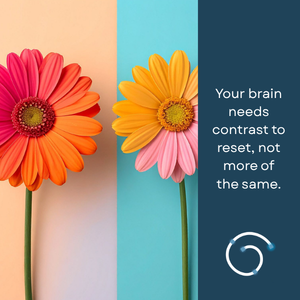
Not All Rest Is Actually Rest
This is where most of us get tripped up.
We think we’re resting… but we’re really just switching inputs.
Scrolling. Email. Videos. Notifications.
That’s not rest. That’s more mental load.
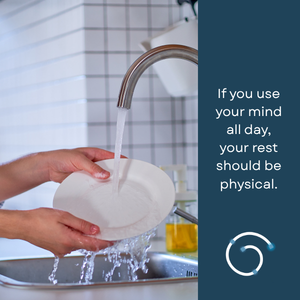
If your work is mostly thinking, as in writing, planning, and creating, then your rest needs to look different.
It needs to give your mind space, not more to process.
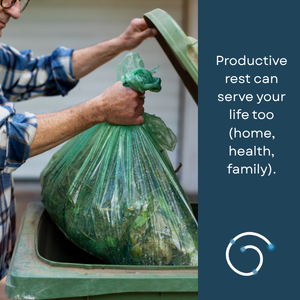
For me, that’s meant doing something physical.
Taking the laundry downstairs. Washing dishes. Walking outside for a few minutes. Even something simple like tidying up a room.
It sounds small, but it works.
It’s like clearing a fog you didn’t realize had built up.
And when I come back, I can actually think again.
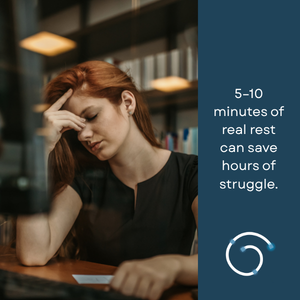
What Happens If You Keep Pushing Through
If nothing changes, the pattern usually continues in quiet ways.
Work takes longer than it should.
The harder tasks get avoided.
The course idea, the one that could really help people, stays stuck in your head.
And over time, you start to build a story about yourself.
That you’re inconsistent.
That you lack focus.
That maybe you’re just not wired for this kind of work.
That story isn’t just discouraging. It’s limiting.
Because it keeps you from taking the next step.
What Changes When You Find Your Rhythm
When you shift from pushing to working in rhythm, something steadier begins to take shape.
You don’t suddenly become perfect or hyper-disciplined. But you do become more consistent.
You finish more of what you start.
Even the tasks you used to avoid begin to feel manageable, because you’re no longer trying to force your way through them in one exhausting stretch.
And maybe the biggest shift is this:
You begin to trust yourself again.
You see that the issue was never that you were broken. You just needed a way of working that matched how you’re actually built.
For those of you creating something meaningful this matters more than you think. Because your course isn’t just information. It’s a bridge. It helps someone move from where they are to where they want to be.
And that kind of work doesn’t come from burnout. It comes from steady, sustainable progress.
A Better Way to Move Forward
You don’t need to overhaul everything today.
You don’t need a perfect system or a fully mapped-out plan.
What you need is a small shift in how you approach your work.
Start with one focused block.
Then step away. Really step away.
Give your mind the space it needs to reset.
That’s enough to begin.
Because momentum doesn’t come from pushing harder. It comes from working in a way that actually works for you.
And if you’ve been stuck in that start-stop cycle for a while, this might be the shift that helps you move again.
Resources & Mentions
- Unpause Playbook (Reset Your Rhythm)
- Redeeming Your Time: 7 Biblical Principles for Being Purposeful, Present, and Wildly Productive by Jordan Raynor (Author)
15 Ways To Create Income Flow from What You Already Know
Subscription give you weekly updates on blogs, podcasts, webinars, and offers from CCS and their partners. We hate SPAM. We will never sell your information, for any reason.
