
You Don't Need Perfect Clarity To Take Action
Mar 18, 2026
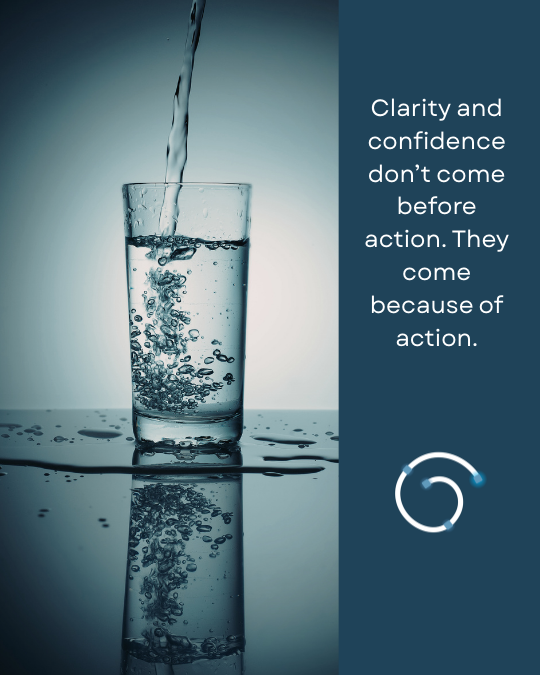
Most people think they need clarity before they take action.
But that is usually not how it works.
In real life, clarity often comes after movement.
You start.
You try.
You learn.
Then you see what the next step needs to be.
That is one of the big ideas behind this episode.
It is also something I have had to learn myself.
I do not have everything figured out. But I do know this: if I had waited until I felt fully ready, there would be no podcast, no tools, and no course.
Those things did not come from having a perfect plan.
They came from taking action, learning in motion, and adjusting along the way.
That is what we explore in this interview.

The trap of waiting until you feel ready
It is easy to believe that the next step requires more preparation.
Maybe you need more research.
Maybe you need better equipment.
Maybe you need more confidence.
So you wait.
You keep thinking about the idea, turning it over in your mind, trying to solve every problem before you begin.
But the truth is that many of those problems cannot be solved in advance.
They only become clear when you start doing the work.
Waiting for complete clarity can become a form of delay. Not because you are lazy, but because you care and you want to do it well.
But sometimes the best way to do something well is simply to begin.

What action actually gives you
Action does something thinking alone cannot do.
It gives you feedback.
When you move forward, even in a small way, you start to see things differently.
You see what works.
You see what needs improvement.
You see what questions actually matter.
Feedback creates clarity.
And clarity helps you make better decisions.
Without action, those lessons never appear.

How things actually get built
Most meaningful projects do not begin with perfect certainty.
They begin with a step.
A first conversation.
A first recording.
A rough first draft.
This podcast is an example of that.
The tools we have created are examples of that.
The course that now exists did not appear fully formed. It grew through trial, learning, and improvement.
None of those things would exist if action had waited for perfect clarity.

Learning while you move
Starting something new often means facing a learning curve.
There are things you will not know yet.
Skills you will need to develop.
Mistakes you will need to correct.
Adjustments you will need to make.
That can feel uncomfortable.
But the learning curve is not a sign you should stop. It is often a sign that you are doing meaningful work.
Every step teaches you something the previous step could not.
The role of conviction
You may not have certainty.
But you can have conviction.
Conviction is what allows someone to move forward even when there are unanswered questions.
It is the belief that the work matters enough to take the next step.
And that step often reveals what needs to come next.

A simple place to begin
If you feel stuck right now, try asking a different question.
Instead of asking:
“What do I need to know before I begin?”
Ask:
“What small step could I take today that would give me more clarity?”
You do not need to see the entire path.
You just need enough light for the next step.
And often, that step is what makes the rest of the path visible.

Resources and Mentions
-
Main Website/Offer: Wholeness After Trauma
-
Facebook: Wholeness After Trauma Page
-
Instagram: @wholenessaftertrauma
-
LinkedIn: Wholeness After Trauma Company Profile
-
YouTube: @WholenessAfterTrauma
- The Scaling Therapy Podcast
- The Unpause Handbook
15 Ways To Create Income Flow from What You Already Know
Subscription give you weekly updates on blogs, podcasts, webinars, and offers from CCS and their partners. We hate SPAM. We will never sell your information, for any reason.
