
The Hidden Cost of Caring: What Burnout Really Looks Like
May 12, 2026
Helping people is meaningful work. Therapists, pastors, and caregivers, just to name a few professions, often step into hard situations every single day. They listen, support, and carry emotional weight for others. Many do it because they genuinely care.
But what happens when caring starts to cost too much?
In a recent episode of the Scaling Therapist Podcast, Laura Howe shared her journey from clinical social worker to founder of Hope Made Strong, an organization that helps churches build healthy care systems and support ministry leaders. Her story shines a light on a problem many helpers face but rarely talk about openly: burnout and compassion fatigue.
Laura spent 20 years working in mental health, supporting people facing serious mental illness, addiction, homelessness, and other crisis situations. On the outside, she was successful and deeply committed to her work. But internally, things were falling apart.
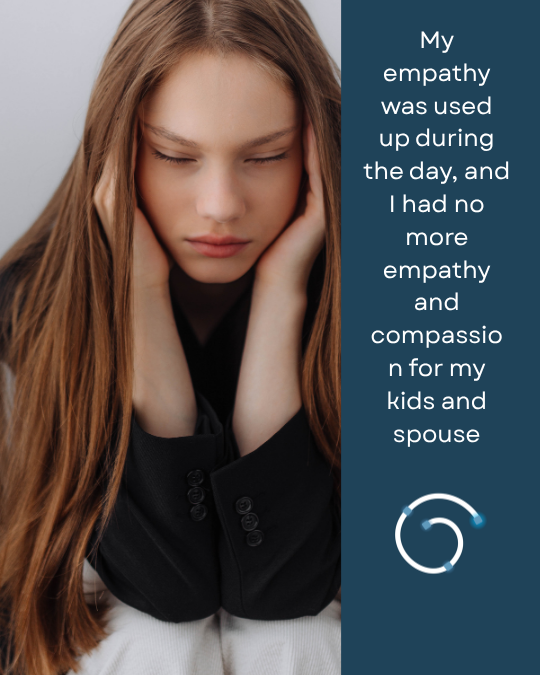
She described sitting in her car before work, dreading the walk into the building. She struggled with not just nightmares, but also crushing anxiety, and stuck in an emotionally volatile state. Even at home, she noticed she had little empathy left for her family because “my empathy was used up during the day.”
And over time, she came to the realization that this was not sustainable. And that, became the inciting act.
Burnout Is Not a Personal Failure
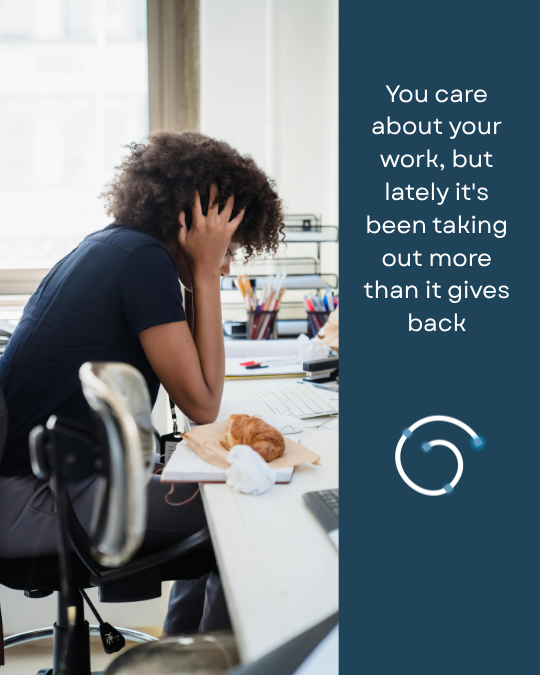
One of the most important lessons Laura shared is that burnout is not simply the result of poor self-care. In caregiving professions, burnout is often a workplace hazard.
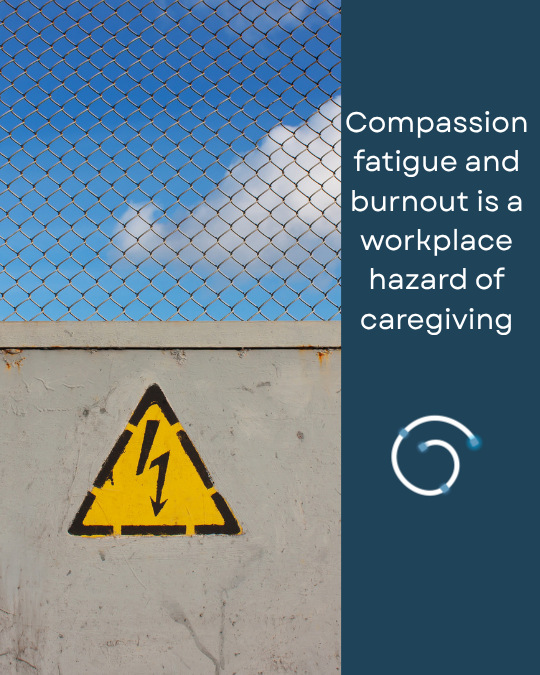
“We need to de-stigmatize it as something that is a result of lack of self-care,” Laura explained. “Compassion fatigue and burnout is a workplace hazard of caregiving.”
And that idea matters, because it’s one that is far too uncommon.
So many therapists, pastors, nurses, and social workers blame themselves when they feel exhausted. They think they should be stronger. More disciplined. Better at balancing life and work. And even people who aren’t in those jobs feel this way as well.
But the reality is different.
When people spend years carrying emotional pain, crisis, trauma, and suffering for others, it impacts them deeply. The effects are often slow and hidden. Laura described compassion fatigue as “insidious” because it sneaks up on caregivers over time.
She also noticed warning signs in coworkers around her:
- Broken relationships
- Emotional numbness
- Cynicism
- Increased alcohol use
- Loss of joy and humor
Laura realized she did not want that future for herself.
“I don’t want to become this crispy, fried social worker,” she said honestly. Because really, who would?
Why Churches Need Better Care Systems
When Laura realized that the path she was on was just not sustainable, she finally took leave from work. And when she went on break, her body absolutely crashed. Things she’d suppressed came right back to the surface, and she found herself confronted with just how much she’d needed a break. And, how much she needed support.
As Laura recovered from burnout, she began seeing connections between her clinical work and her experience in church ministry.
She noticed churches often had compassionate people but lacked healthy systems for care.
Many churches reacted to crises instead of preparing for them. Meals, support, financial help, and counseling referrals were often handled in a rushed and disorganized way. Different families received different levels of care depending on who knew them best.
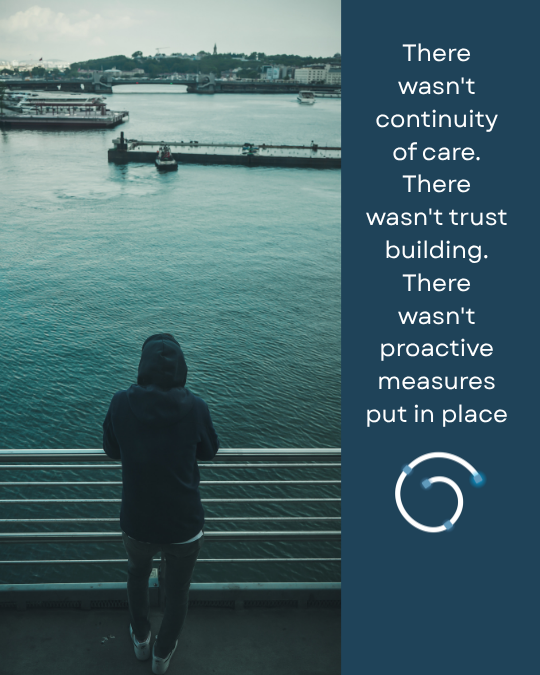
“There wasn’t continuity of care,” Laura explained. “There wasn’t trust building. There wasn’t proactive measures put in place.”
Sometimes, those problems could have been prevented if a proper support system had been there. Not always, of course, but sometimes.
And so as that gap became more apparent, it also became her mission. Laura started Hope Made Strong to help churches create organized, sustainable care ministries that truly support both the people receiving and giving care.
Her organization now helps churches build:
- Care systems and workflows
- Volunteer onboarding processes
- Confidentiality and ethics practices
- Team support structures
- Policies and procedures
- Burnout prevention strategies
The goal is not simply to help more people a little bit and then leave them drowning. It is to help people well, and to truly provide an answer to a problem.

Caring for the Caregivers
One of the most powerful parts of Laura Howe’s story is that she did not leave helping work entirely. Instead, she rebuilt the way she approached it.
Now pay attention, because that view matters.
Many caregivers believe they only have two choices:
- Keep pushing until they break
- Walk away completely
But Laura discovered there was another option. She could still serve people while creating healthier systems and boundaries around the work, keeping it from consuming her life.
During her time away from work, there was something very important she began to see. The people doing the caring often had very little support themselves.
Church volunteers were exhausted, ministry leaders were overwhelmed, and therapists were emotionally drained to a point where they would end up crashing so messily that they’d have to stop working completely. Everyone was reacting to crisis after crisis without enough structure, rest, or emotional replenishment.
“Care was kind of done flippantly off the side of everyone’s desk,” Laura explained, meaning that nobody was really considering the fact that among those who had been pouring so much emotionally into others, they weren’t getting emotionally poured back into.
That constant reaction mode creates emotional exhaustion over time. When every problem feels urgent, helpers never truly recover before the next crisis arrives.
Burnout Thrives in Chaos
And just another reason burnout becomes so dangerous and prevalent in many caregiving environments is because they operate without clear systems.
In churches, for example, Laura noticed there were often no policies, no organized workflows, and no long-term care strategies. Support depended heavily on whoever happened to be available in the moment. Which is a dangerous thing, since it could possibly take a person who gets dragged into the current emergency who had also tended to the last emergency, and the one before that, and so on and so forth, leaving them emotionally wiped out.
That creates inconsistency not only for the people receiving care, but also for the volunteers and leaders providing it.
Without healthy systems, things fall apart. Caregivers overextend themselves. Emotional boundaries vanish like a vapor in the wind. Crises pile up, one after the other, slowly drowning those involved.
And eventually, people shut down emotionally.
Laura described coworkers who had lost their sense of humor and compassion after years of constant caregiving pressure.
That emotional numbness is often a consequence of compassion fatigue.
Sustainable Helping Requires Structure
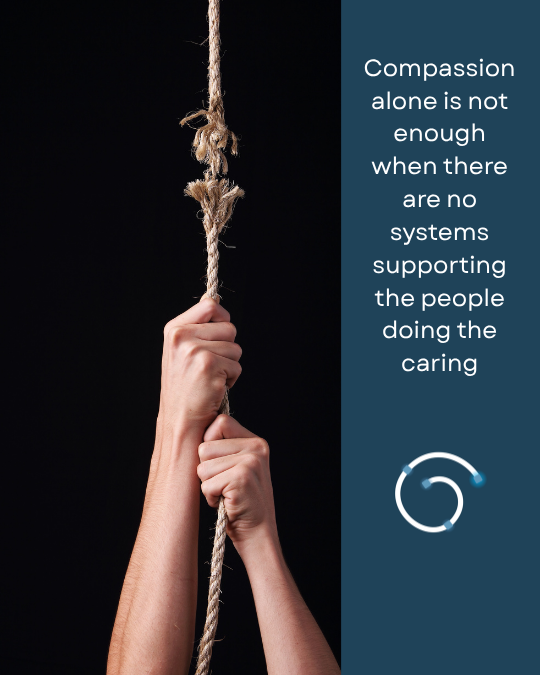
One of the biggest myths in caregiving is that compassion alone is enough. That you can push through and everything will be fine and dandy if you can just get past that moment.
And yes, compassion matters deeply. But without structure, even the most caring people eventually run dry. Just like with a lake, if you were to just keep draining it without letting it have any sort of water inflow, it would eventually go dry and the eco systems there would die off.
That is why Laura now helps churches build systems that support both the community and the caregivers themselves.
Healthy care systems include things like sharing responsibilities, clear boundaries that work is not allowed to step over, and proper rest and recovering practices.
These systems are not cold or impersonal. They actually create safer and more sustainable care because of the people in them.
And when helpers, or really anyone, know they are supported, they can continue serving people without sacrificing their own mental health.
You Cannot Pour Out Forever
One of the most honest moments in the interview came when Laura talked about how caregiving affected her family life.
“My empathy was used up during the day,” she admitted. That sentence will feel familiar to many.
Sometimes the people we love most receive the smallest emotional leftovers because work has already consumed everything we had to give.
That is not a sign of failure. It is a signal that something needs to change in your life.
Burnout recovery is not simply about taking a vacation or scheduling a massage, unfortunately. Often, it requires deeper changes like making your workload lighter, getting support from a community, and having honest conversations about what you can handle at the moment.
For Laura, healing started when she finally stopped long enough to recognize how deeply exhausted she had become.
“When you stop, your system is like, whoa, whoa, whoa, you need help,” she said.
There Is a Better Way to Help
The good news is that burnout does not have to be the end of someone’s calling. Helpers can continue making an impact while also protecting their own well-being. They can do that through following the tips that were shared throughout this blog post.
Another, and extremely important thing we all need to recognize is this: caregivers are human too.
The people supporting others also need care, rest, encouragement, and recovery, just like you and I.
Laura’s work through Hope Made Strong reminds us that sustained helping is possible. Communities can become healthier when we stop glorifying exhaustion and start building systems that allow caregivers to thrive for the long term.
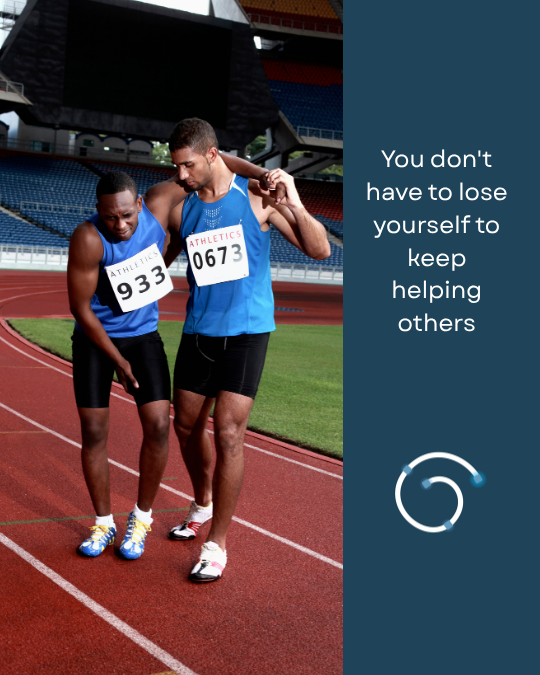
Because caring for others should never require losing yourself in the process.
Resources & Mentions
- Hope Made Strong
- Hope Made Strong Podcast
- The Unpause Playbook
A simple place to reset, get clear, and take your next step without being overwhelmed.
15 Ways To Create Income Flow from What You Already Know
Subscription give you weekly updates on blogs, podcasts, webinars, and offers from CCS and their partners. We hate SPAM. We will never sell your information, for any reason.
