
Start With One
Jun 04, 2026
When people hear that Reboot Recovery has helped more than 50,000 people through hundreds of locations around the world, they naturally assume there must have been a master plan behind it all. They imagine a founder who started with a detailed growth strategy, fundraising roadmap, and a vision for building a huge organization from day one.
According to Evan Owens, that's almost exactly the opposite of what happened.
In a recent conversation on the Scaling Therapist podcast, Owens reflected on the early days of Reboot Recovery and the lessons he's learned while growing it from a gathering in his living room into a worldwide faith-based trauma recovery ministry. And one thing out of many that stood out was that it wasn't a discussion about scaling systems or organizational charts. It was his insistence that the organization's growth came from paying attention to the people directly in front of him rather than chasing some future version of success.
That mindset shows up throughout his story.

It Started With a Dinner Party, Not a Business Plan
Owens describes one evening in 2010 as one of the most important moments of his life. His wife Jenny, who was working with military families at the time, had invited several people to their home after noticing that many of them were carrying similar wounds and telling similar stories.
When he arrived home from work, the gathering had already moved past casual conversation. People were talking openly about loss, shame, betrayal, guilt, and trauma. Instead of surface-level interaction, there was a sense that something meaningful was happening around the table.
Looking back, Owens said it felt as though "healing knocked on the door, came in, sat down and began to do work among all of us."
The next day he called his wife and said something that would ultimately alter the direction of his life:
"I don't know what it is, but I want to do more of whatever we did last night."
What's striking is that he wasn't dreaming about launching a nonprofit. He wasn't trying to become a speaker, author, or ministry leader. He simply wanted to continue helping the people who were already in his life.
That distinction matters because many entrepreneurs begin with a vision of growing a business. Owens began with service.
Listening Became the Strategy
One of the most refreshing parts of the conversation was hearing Owens admit that he wasn't an expert.
He didn't have clinical training. He wasn't a therapist. He wasn't arriving with a sophisticated framework for trauma recovery.
For years, much of his approach consisted of asking questions, listening carefully, refusing to judge people for their responses to trauma, and creating spaces where they felt safe enough to tell the truth.
As he put it, "I don't have a therapy background, and so I'm just this idiot who's asking really open-ended questions and listening and telling people I love them."
There's a lesson here for anyone creating a course, building a business, launching a ministry, or developing a service. We often assume our value comes from having answers. Owens suggests that real insight often comes from listening long enough to understand the problem at a deeper level than anyone else.
He credits much of Reboot's curriculum not to his own brilliance, but to years of observing what was actually helping people heal.
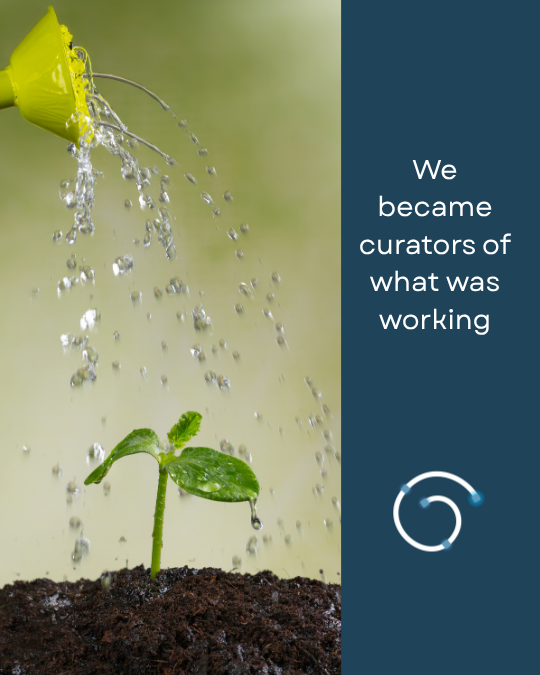
"We became curators of what was working for other people," he explained.
That's a very different approach than building from theory.
Why the First Follower Deserves More Credit Than the Leader
“The First Follower” idea is something truly important we want to focus on.
Most leadership books focus on the visionary. They celebrate the person standing at the front of the room with a bold idea. Owens argues that leadership is often overrated.
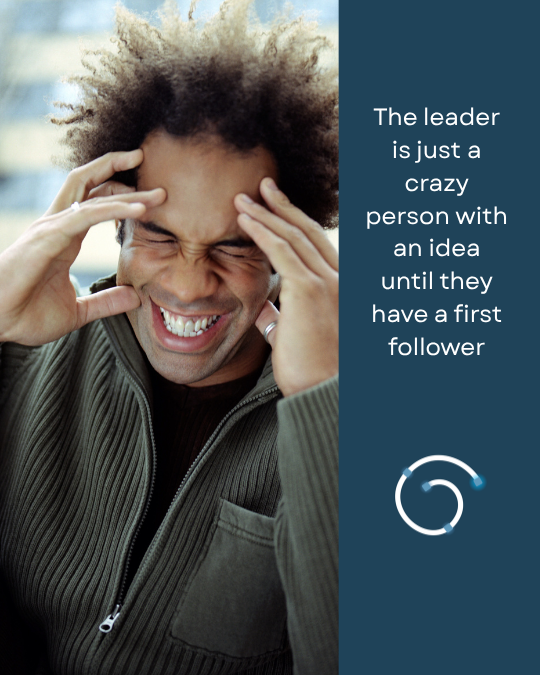
"The leader is just a crazy person with an idea until they have a first follower."
In his view, the first follower is the person taking the greater risk. They're the one willing to publicly associate themselves with an unproven idea. They're the person saying, "I think there's something here."
As Reboot Recovery expanded, Owens noticed the same pattern repeatedly. Growth didn't happen because he became a better marketer. It happened because influential people in local communities saw value in what was happening and decided to champion it themselves.
Every new location began with somebody willing to become that first follower.
The principle is worth considering for anyone who feels frustrated by slow growth. Before worrying about reaching thousands of people, it may be worth asking whether you've earned the trust of just one person who believes strongly enough in the mission to bring others with them.
Fear Changes the Way We Build
Another insight came when Owens discussed entrepreneurship.
Many people assume success requires quitting your job and going all-in immediately. Owens did not do that.
For years he continued working while building Reboot Recovery. At the time, he viewed that decision as caution. Looking back, he believes it may have been one of the reasons the organization survived.
When founders become financially dependent on a new venture too quickly, every decision becomes influenced by pressure. Instead of patiently refining an idea, they feel compelled to monetize immediately.
Owens observed that fear often causes leaders to overprice services, expand prematurely, or create products before they've truly validated what people need. By maintaining stability, he and his wife were able to focus on serving people rather than extracting revenue from them.
That allowed Reboot to mature organically before attempting to scale.
The Difference Between an Organization and a Movement
Toward the end of the conversation, Owens shared a perspective that challenged many common assumptions about growth.
He believes organizations and movements are not the same thing.
Organizations require structure, systems, and control. Movements are often messy, unpredictable, and difficult to manage. While structure is necessary at some stage, Owens believes many movements lose their vitality when leaders become more concerned with managing growth than serving people.
"Movements are wild," he said. "They grow like wildflowers and they go places you didn't expect them to go."
That's exactly what happened with Reboot Recovery. What began as a small gathering in a living room eventually spread into military communities, prisons, churches, shelters, and cities that the founders never could have predicted.
The growth wasn't driven by a centralized strategy. It was driven by local leaders who believed in the mission and carried it into their own communities.
That's a fundamentally different model than simply distributing resources. It's multiplication rather than expansion.

Final Thoughts
The biggest takeaway from this conversation wasn't about trauma recovery, leadership, or even entrepreneurship. It was a reminder that meaningful work often starts much smaller than we expect.
Before there were hundreds of locations, there was a living room.
Before there was a curriculum, there were conversations.
Before there was a movement, there was a first follower.
And before any of that, there was simply a willingness to care deeply about the people sitting across the table.
Resources Mentioned
Free Unpause Playbook
For therapists, coaches, and helpers who feel stuck and need one clear next step.
https://www.coursecreationstudio.com/unpause
REBOOT Recovery
Learn more about REBOOT Recovery, join a course, or explore leading a group.
https://rebootrecovery.com/
Lead a REBOOT Recovery Course
Start here if you are interested in bringing REBOOT to your church, ministry, community, or organization.
https://rebootrecovery.com/
Contact Evan Owens
Evan shared his email in the episode for people who want help getting connected.
[email protected]
First Follower: Leadership Lessons from Dancing Guy
The short video James and Evan mention about how movements begin.
https://www.youtube.com/watch?v=fW8amMCVAJQ
Course Creation Studio
Resources for therapists, coaches, and helpers who want to turn what they know into life-changing online courses. https://www.coursecreationstudio.com/
Humor Speaks Offer From Ray
James mentions a special offer from Ray at Humor Speaks about helping people turn their worst-selling month into their best-selling month. To receive that offer, join the Course Creation Studio email list by grabbing the free Unpause Playbook.
15 Ways To Create Income Flow from What You Already Know
Subscription give you weekly updates on blogs, podcasts, webinars, and offers from CCS and their partners. We hate SPAM. We will never sell your information, for any reason.
