
Just Get It to Exist: Trauma, Resilience, and Taking the Next Step Forward
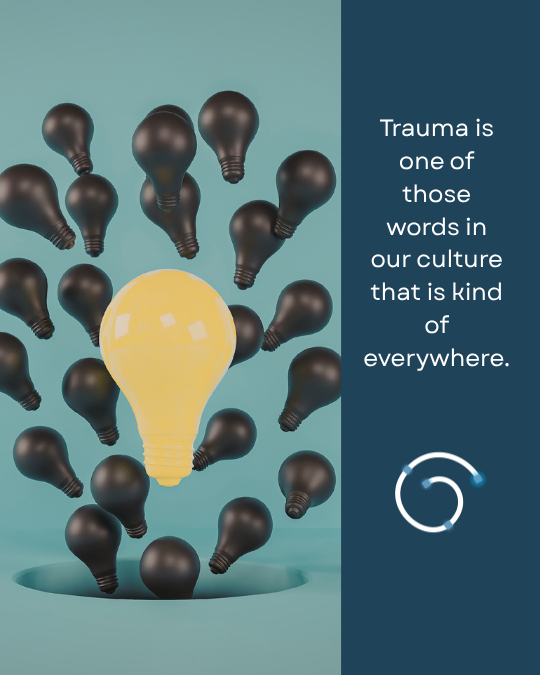
Apr 28, 2026There’s a reason the word trauma keeps coming up everywhere right now.
It doesn’t just show up in therapy rooms, it can appear in church conversations, social media, and everyday life. People are becoming more aware than ever before. But awareness doesn’t always mean understanding.
In this conversation with therapist and pastor Evan Marbury, one thing became clear: people know the word, but they don’t always know what to do with it.
And that gap in knowledge matters a lot more than you might think.
Because when trauma is misunderstood, it can quietly start messing with the show from behind the scenes.
When Trauma Becomes the Decision-Maker
Trauma is real. Pain is real. Brokenness is real.
But one of the key tensions in this conversation is very simple: trauma is not meant to be ultimate.
Evan pointed out that many people begin to organize their lives around their pain. Their decisions, relationships, and behaviors start to orbit around what happened to them.
That’s where things shift.
Instead of living with trauma, people begin living for it.
As discussed in the episode:
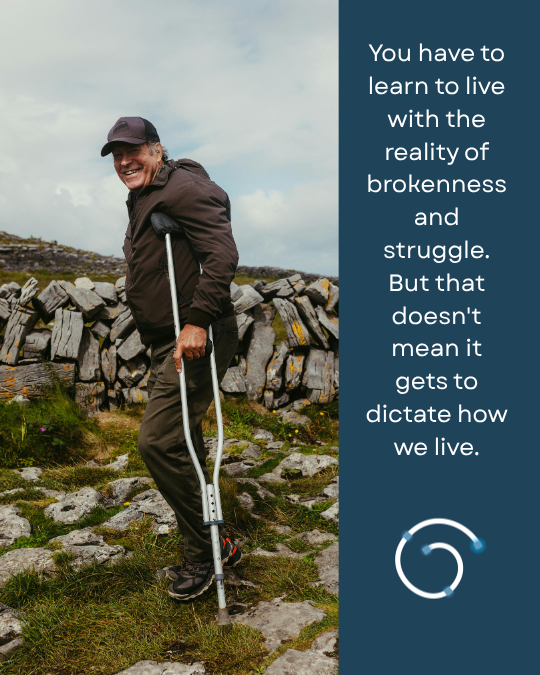
“If someone has cancer… you learn how to live with it. But that doesn’t mean it gets to dictate how you live.”
That same idea applies here.
There is a way to carry pain without letting it define every decision. There is a way to move toward fullness, even with a hard story.
The Behavior Isn’t Random
One of the most helpful parts of the conversation is the reminder that behaviors always have a backstory.
The example of the woman at the well highlights this perfectly.
On the surface, going to the well at noon doesn’t seem like a big deal. But when you slow down, it raises a question: why that time?
It points to something deeper. Avoidance, shame, and isolation are things that can be hidden beneath those behaviours.
And that’s often how trauma works.
People don’t always explain their pain directly. Instead, it shows up in patterns:
- Avoiding certain places
- Pulling back from relationships
- Changing routines
- Staying hidden
From the outside, those choices can look confusing. But when the underlying wound is considered, they start to make a lot more sense.
“The issue is the driving force,” Evan explained.
And until someone gets curious about that driving force, the behavior will always seem like it’s an innocent thing.

The Role of the Empathetic Witness
So for those in the position of caring emotionally, physically, and mentally for others, this raises an important question:
What is the actual role when walking with someone through trauma?
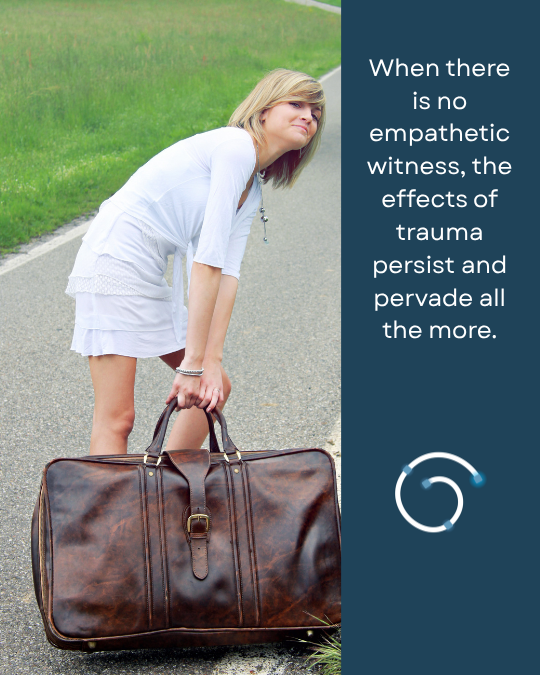
Evan introduced the idea of the empathetic witness.
This is someone who sees the pain and moves toward it—but doesn’t try to control it.
Instead, they make sure to prioritize just being there.
“You can walk with them, but you can’t go through it for them.”
That line captures it.
An empathetic witness is present enough to say, “You’re not alone in this,” but grounded enough to avoid taking over the process.
That balance is critical.
Because when helpers try to carry what isn’t theirs, it often leads to burnout, frustration, or even harm to both parties.
You Can’t Heal for Someone Else
This is one of the hardest lessons for people who care deeply.
There’s a natural desire to make things better. To speed up healing. To protect someone from pain.
But healing doesn’t work on anyone’s timeline except its own, unfortunately.
“We don’t get to decide the timetable,” Evan shared.
This applies across the board.To therapy, ministry, friendships, and even families.
Support matters. Presence matters. Guidance matters. But ownership stays with the person doing the healing.
That boundary isn’t a lack of care, it’s what makes real care possible.

From Trauma to Creativity: The Same Fear Shows Up
But trauma isn’t the only thing this post is about. Something many people quietly wrestle with is creating something meaningful and putting it into the world. It could be a cook, a course, a workshop, or even a message they want to share with the world.
Evan wrote his book in the middle of a full life—raising kids, pastoring, counseling.
And like most people who attempt something like that, he ran into the same internal resistance:
“Who am I to do this?”
That question shows up absolutely everywhere.
And not just in writing, but in any kind of mission-driven work.

The Power of the Next “Yes”
So, instead of trying to solve everything at once, Evan focused on one simple idea:
Take the next step of yes.
Not ten steps ahead. Not the perfect plan. Not total certainty.
Just the next step.
“I’m going to take the next step of yes until it becomes very clear that it’s a no.”
And that approach removed a lot of pressure.
It turned a massive project into a series of small, doable decisions. So who’s to say that you can’t accomplish that idea that’s bouncing around in your head?

Just Get It to Exist
The phrase that tied everything together was this:
“Just get it to exist.”
That’s it.
Not perfect or polished, and most definitely unrefined.
But it’s real.
Because the biggest barrier for many people isn’t a lack of ability. No, it’s the weight of perfection.
Waiting for the perfect version often means nothing actually gets created at all.
But once something exists, it can be shaped, improved, refined, and shared.
Before that, it’s just an idea sitting in a box in your mind, gathering dust and sitting under a lone lightbulb that’s threatening to flicker out.
Putting the Mission in Motion
There’s a clear idea running through this entire thing.
Whether it’s healing from trauma or stepping into a creative calling, the pattern is the same:
- You don’t need the full plan
- You don’t need perfect clarity
- You don’t need to eliminate fear
You just need the next step.
There are people carrying pain who need someone to simply be with them. There are also people carrying ideas who need to finally act on them.
Both require movement, both require courage, and both start the same way:
By taking the next step.
So go on, get off your computer, or your phone, or whatever it is you’re on, and stop pretending you need a full picture to start your idea.

Resources & Mentions
- Evan Marbury’s book: Understanding Trauma and Resilience (Pre-order on Amazon)
- Baker Academic → https://bakeracademic.com/search?q=Evan%20Marbury
- Evan’s website → https://evanmarbury.com
- Unpause Playbook → https://coursecreationstudio.com/unpause
15 Ways To Create Income Flow from What You Already Know
Subscription give you weekly updates on blogs, podcasts, webinars, and offers from CCS and their partners. We hate SPAM. We will never sell your information, for any reason.
