
How to Stop Sounding Generic in Your Therapy Marketing
Apr 01, 2026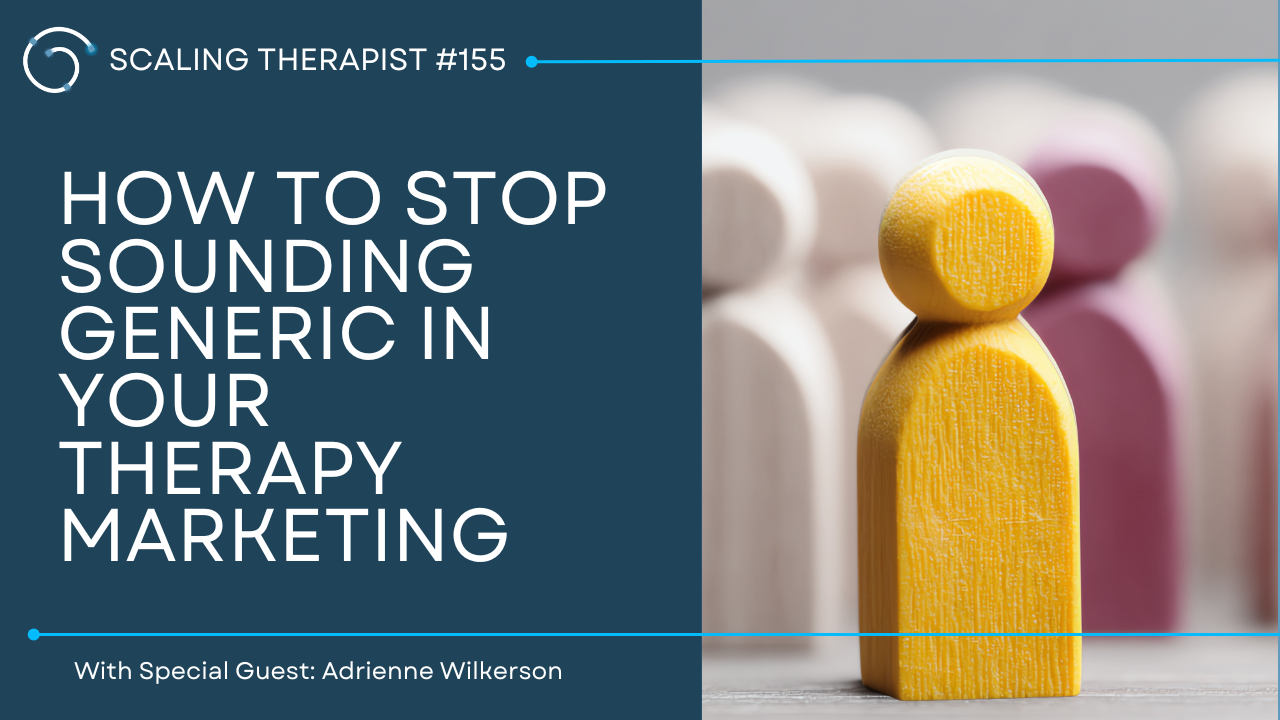
Therapy marketing can feel awkward. Many therapists want to help people, not “sell” to them. But when your website, social posts, or bio sound too polished, too broad, or too much like everyone else, potential clients may scroll past without reaching out.
That is the big idea from this episode of the Scaling Therapist Podcast with host James Marland and guest Adrienne Wilkerson, CEO and co-founder of Beacon Media and Marketing. Their message is simple: the best therapy marketing is built on human connection.
If your therapy marketing sounds generic, it is often because it is missing the one thing clients are really looking for: a sense that you understand them.
Adrienne said it clearly: “The heart of marketing is to build connection.” That line matters. People who are looking for therapy are not just shopping for services. They are looking for safety, trust, and hope. They want to know: Can this person help me? Do they get what I am going through? Can I open up here?
When your marketing answers those questions in a real and human way, it stops sounding flat. It starts sounding like you.

Why Generic Therapy Marketing Fails
A lot of therapy websites sound the same. They list services. They name credentials. They use calm colors and careful wording. None of that is bad. But it is often not enough.
Adrienne explained that people can tell when something feels empty or overly polished. Talking about AI, she said, “There’s almost always a reaction to purely AI written stuff… it’s kind of flat. There’s nothing that hooks my heart and makes me wanna keep reading.”
That same problem shows up in therapy marketing even when AI is not the cause. Generic copy often sounds safe, but it doesn't create trust. It doesn't help someone feel seen.
James made a similar point when he talked about using AI for organizing content. He said it can make things “grammatically perfect, but humanly void.” That is a sharp way to put it. Perfect grammar does not build connection. Empathy does.

AI Can Help, But It Cannot Be You
AI came up early in the interview, and Adrienne gave a grounded view that many therapists need to hear. She said AI is an amazing pattern recognition tool, but it cannot replace empathy or intuition.
Her exact words were powerful: “AI’s not going to replace humans because it can’t replace empathy. It can’t replace intuition.”
That matters a lot in therapy marketing.
You can use AI to brainstorm, outline, or speed up a rough draft. But you should not let it speak for you without editing. It may produce clean writing, but it often misses context, tone, and the little human details that help people trust you.
Adrienne said, “AI is an amazing help meet. It’s a good copilot, but it’s not going to be able to fly that airplane.” In other words, it can support your work, but it should not lead your message.
For therapists, this is important. Your voice is part of the service. The way you explain things, the stories you choose, the warmth in your tone, and the way you make people feel all matter before a client ever books a session. After all, wouldn't you rather talk to a person and not an automated robot when working through an issue over the phone?

People Want Help, Not a Sales Pitch
One of the best parts of the episode was this idea: people hate being sold to, but they like to buy.
That sounds simple, but it changes how you think about marketing.
People searching for a therapist already have a problem they want solved. They are not waiting for a clever ad trick. They are hoping to find someone who understands their pain and can guide them forward.
Adrienne said, “We as humans, we hate being sold and we can tell when we’re being sold, and that’s a turnoff, right? But we like to buy.”
That is why connection-first marketing works. When your marketing starts with lead generation only, it often feels cold. When it starts with care, it feels different. It feels like help.

Get Specific About Who You Help
A big reason therapy marketing sounds generic is because it tries to speak to everyone.
Adrienne pushed back on that hard. She shared a truth many business owners do not like hearing: “Everybody is nobody.”
If your website says you help all people with all problems, your message gets blurry. People do not know if you are the right fit for them. But when you get clear about your ideal client, your message becomes stronger.
Maybe you help women with high-functioning anxiety. Maybe you support couples raising a child with a disability. Maybe you work with adult children of alcoholics. Specificity creates clarity.
Adrienne shared a personal example from her father’s journey into therapy. His stepfather was an alcoholic, and that personal experience shaped his early work as a therapist. That story gave his practice heart and direction.
Your niche is not just a marketing trick. It is often tied to your real why.

Use Story to Create Trust
You do not need to overshare your life to connect with clients. But you do need to sound like a real person.
James talked about small stories that create connection. Not big, dramatic moments. Just everyday moments that reflect what your clients feel. He shared a story about feeling anxious in a mastermind group and being scared to speak up. That small story made a bigger point: people connect with honesty.
This is the kind of content that works. A short story about a moment of fear. A lesson from a real-life experience. A simple reflection on what helps.
Stories help people think, “Yes, that feels like me.”
And that is when trust starts.

The Best Therapy Marketing Tip in the Episode: Video
If there was one standout practical tip in the episode, it was video.
Adrienne said therapists can build connection through short, simple videos. Not polished studio content. Not expensive productions. Just real, helpful, human videos.
She explained it this way: “It doesn’t need to be polished. In fact, it should not be overproduced.”
That is good news for therapists who feel nervous about being on camera. You do not need a full set, fancy mics, or a production team. You need decent lighting, a stable camera, and a message that speaks to your ideal client.
Her advice was simple:
Talk about a specific issue your client faces.
Give one short tip.
Keep it around 20 to 30 seconds.
Make eye contact.
Be real.
She said, “Think of yourself as sitting there talking to a patient.”
That is the tone potential clients want. Not perfect. Not corporate. Not polished past recognition. Just helpful and human.

Rework Your Bio So It Sounds Like a Person
Another great takeaway was Adrienne’s advice to revisit your website bio.
Many therapist bios sound like résumés. They list degrees, certifications, and training. Those things matter, but they should not be the whole story.
Adrienne asked a better question: does your bio create connection?
She said your bio should go beyond credentials and share your “why” in a way that matters to the person reading it. The point is not to talk about yourself for the sake of it. The point is to help the reader feel that you understand where they are and where they want to go.
A strong bio says more than “Here is where I went to school.” It says, “Here is why this work matters to me, and here is how I can help you.”

Final Thoughts: Connection Is the Real Strategy
This episode is a good reminder that therapy marketing does not need more noise. It needs more honesty.
The goal is not to sound impressive. The goal is to sound real.
As Adrienne put it, “If you connect with your ideal client, the likelihood of them wanting to do business with you… is so much greater.”
That is the real strategy.
So if your marketing sounds generic right now, do not rush to make it louder. Make it more human. Get clearer about who you help. Share short stories. Record simple videos. Rewrite your bio. Use AI as a helper, not a replacement.
Most of all, let your marketing sound like the person your clients are hoping to find.

Resources and Links
Unpause Playbook
https://www.coursecreationstudio.com/unpause
Beacon Media and Marketing
https://www.beaconmm.com
About Beacon Media
https://www.beaconmm.com/about/
Connect with Adrienne Wilkerson on LinkedIn
Beacon Way Podcast
Available on all podcast platforms and YouTube
Scaling Therapist Services Directory
https://scalingtherapistservices.com
You can find all of our pro-level sponsors, including Hey Boss Co, Profit Comes First, and Freedom Business Solutions, inside the Scaling Therapist Services Directory. These are trusted partners who can help you grow and support your therapy business.
Storyworthy by Matthew Dicks
15 Ways To Create Income Flow from What You Already Know
Subscription give you weekly updates on blogs, podcasts, webinars, and offers from CCS and their partners. We hate SPAM. We will never sell your information, for any reason.
